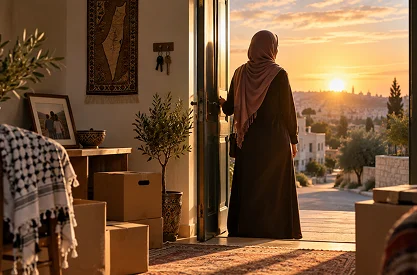
Being born a girl in a patriarchal Arab Household comes with a story already half-written for you. Expectations start early, and rules are set silently. And before you even begin to understand who you are, you are told who you are supposed to be.
It doesn’t happen with a loud announcement. It occurs in the quiet: how boys are praised and girls are warned, how your freedom is filtered through the culture of honor, and the subtle weight you carry just for being a daughter.
Expectations Are Gendered, Always
From a young age, Arab Girls often learn that love is unconditional. Be good, be quiet, cover up, help your mother, don’t talk back, don’t seek attention, and don’t be too loud or too curious.
Meanwhile, your brother might be praised for being outspoken. He can come late; he can make mistakes without it becoming a family scandal. You see the difference, and it shapes how you move through the world.
This is the reality of gender equality, where the roles of daughters and sons are vastly different. Gender discrimination isn’t just about behavior but about future expectations. Marriage is often treated as a girl’s ultimate achievement, while education and career are considered as “nice bonuses,” not priorities.
You grew up believing that your worth is something to prove, that you must earn your freedom through obedience.
Love Often Comes With Strings
One of the most painful effects of gender inequality in an Arab household is the way love is tied to obedience. A daughter is told, “We only do this because we love you.” The love starts to feel like a leash. If you obey the rules, you’re cherished; if you question them, you’re shamed.
Saying no often comes with consequences: guilt, silence, or even punishment. Many Arabic women and Arab girls learn to shrink themselves, not because they lack thoughts, but because they are tired of defending them.
The Weight of Honor
In many traditional homes, the concept of honor defines a family’s reputation. If a girl makes a ‘mistake,’ the whole family suffers. Whereas, if a boy does, he’s told to ‘do better next time.’ This double standard is a heavy burden for daughters.
Even after gaining independence, an Arab woman may still suffer criticism, since her choices are scrutinized within the context of Arab culture and women’s responsibilities. She is seen not as an individual, but as a risk.
Quiet Resistance and Inner Strength
Arabic women have always been strong, even when things are difficult. Resistance may look small, like keeping a secret journal, pursuing education behind closed doors, or speaking up even when it shakes the room.
These acts of courage and moments don’t always make headlines, but they are revolutionary. Living in a patriarchal Arab household requires women to learn how to adapt without compromising their integrity. It involves learning to live in two worlds: the one you were born in and the one you want to live in.
Healing, Boundaries, and Redefining Worth
Deana Ealine’s book, Tragic Whisper, explores reinventing one’s life and the power of consistent, hard work. Many women carry the scars of their childhood into adulthood. This category includes issues such as not knowing how to value themselves, feeling guilty about establishing limits, and being afraid of letting others down.
But it is possible to heal.
It begins with unlearning: understanding that your worth isn’t based on being obedient, quiet, or giving up. It is necessary to acknowledge that love differs from dominance and that establishing boundaries is polite.
Deana Elaine
Deana Elaine is an American-Palestinian author who wrote Tragic Whispers, which takes you through her life. This book will guide you through the steps and procedures needed to overcome trauma and break generational curses, helping you become a bridge for change.
Final Thoughts
From the perspective of Author Deana Elaine, to be a woman in a patriarchal Arab household is to be layered. It is to carry both pride and pain. It involves navigating both culture and conflict. It encompasses both love and resistance. But it is also about surviving. To evolve. To dream bigger than what was expected of you.
You are grateful for questioning what hurt you. Wanting more will not break you. You are brave for even reading this, in fact, for even thinking about it.
FAQs
What does it mean to be a woman in a patriarchal society?
It means living with unequal expectations, where women often face gender discrimination, limited freedom, and pressure to uphold family honor—while still showing resilience and strength.
What is patriarchy in Arab culture?
Patriarchy in Arab culture refers to a family and social system where men hold primary power and authority, while traditions, honor, and gendered expectations often limit women’s roles.
What is the root cause of patriarchy?
The root cause of patriarchy lies in historical power structures where men controlled resources, authority, and social roles, creating systems that prioritized male dominance over women.
How can we dismantle the patriarchy?
We dismantle the patriarchy by challenging gender inequality, promoting equal rights, amplifying women’s voices, breaking harmful traditions, and creating systems based on fairness and respect.